Influencer Marketing: Connecting Brands with Audiences in the Digital Age
In the bustling marketplace of the internet, where traditional advertising noise is often tuned out, a more personal and powerful form of promotion has taken center stage: influencer marketing. At its core, it is the collaboration between brands and individuals who have built a dedicated, trusting audience on social media or other digital platforms. Unlike celebrity endorsements of the past, modern influencer marketing thrives on relatability, niche expertise, and authentic connection. This article will explain this dynamic field from the ground up, exploring its mechanisms, significance, and how visual tools like icon sets can support its implementation across various digital projects.
What is Influencer Marketing, Really?
Let's start with a simple definition. Influencer marketing is a strategic partnership where a brand leverages the credibility and reach of an individual—the influencer—to promote its products, services, or values to that influencer's followers. The key ingredient is trust. An influencer has typically spent years cultivating a community around a specific interest, whether it's sustainable fashion, gaming tech, gourmet cooking, or fitness. Their followers view them not just as a broadcaster, but as a peer or an expert guide. When they recommend a product, that recommendation carries weight.
A common misunderstanding is that influencer marketing is solely about having a massive follower count. While reach is important, engagement and relevance are often more critical. A micro-influencer with 10,000 highly-engaged followers in a specific niche can drive more meaningful conversions than a mega-influencer with a million passive followers. The purpose is to tap into pre-existing communities with genuine conversations, rather than simply broadcasting a message to a vast, anonymous crowd.
The Significance and Impact on Modern Business
The significance of influencer marketing lies in its alignment with contemporary consumer behavior. People, especially younger demographics, increasingly distrust direct advertising and seek authentic, peer-reviewed opinions. It fits seamlessly into the social media ecosystem where discovery and shopping are now intertwined. For businesses, it offers:
- Enhanced Credibility: Borrowed trust from a respected figure.
- Targeted Audience Access: Direct entry into a specific, curated demographic.
- Creative Content Generation: Influencers create native, platform-friendly content.
- Higher Engagement Rates: Campaigns often generate more comments, shares, and likes than traditional ads.
Its practical relevance spans virtually every industry—from tech companies launching new apps to food brands promoting a recipe, to educational platforms showcasing their courses. It has become a staple in modern digital marketing strategies, not as a replacement, but as a vital complement to search, email, and content marketing.
The Building Blocks of an Influencer Campaign
Executing a successful campaign involves several key steps. It's not merely about sending a free product and hoping for a post. A strategic approach includes:
- Goal Definition: What is the aim? Brand awareness, product launches, driving website traffic, or direct sales?
- Influencer Identification & Vetting: Finding creators whose values, audience, and content style align with the brand. Tools often analyze engagement rates and audience demographics.
- Relationship Building & Agreement: Clear communication on expectations, deliverables, compensation (which can be monetary, product-based, or experience-based), and disclosure guidelines to maintain transparency.
- Content Creation & Amplification: The influencer creates the content (posts, videos, blogs), often in their unique style. The brand might also boost this content through its own channels.
- Measurement & Analysis: Using metrics like engagement, click-through rates, conversions, and return on investment (ROI) to gauge success.
An example that helps illustrate this: Imagine a new skincare brand for sensitive skin. Instead of a generic TV ad, they partner with a dermatologist and several beauty influencers who have built communities around honest product reviews and skincare routines. These influencers can demonstrate the product's use, share their genuine results, and answer followers' questions. This natural integration into trusted content is far more effective than a standalone advertisement.
Common Pitfalls and How to Avoid Them
As the field has grown, some assumptions have led to missteps. One major pitfall is seeking control over the influencer's creative voice. Overly scripted or branded content can break the authenticity that makes the partnership valuable. The best collaborations allow the influencer creative freedom within agreed guidelines. Another misunderstanding is viewing it as a one-off transaction. Building long-term ambassador relationships often yields deeper audience trust and better results than a single post. Finally, neglecting proper measurement can make it hard to understand true value; aligning campaign goals with specific, trackable metrics is essential.
Visual Communication: The Role of Icons in Digital Projects
While influencer marketing happens in the dynamic world of social content, the strategy, planning, and presentation of these campaigns occur in more structured digital environments. This is where visual assets, like dedicated icon sets, become incredibly useful. Icons serve as simple, immediate visual cues that represent concepts, actions, or objects—making complex information easier to digest and interfaces more intuitive.
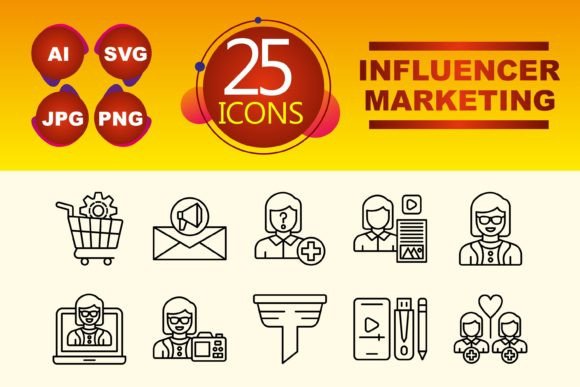
Consider a set of Influencer Marketing icons, designed in a clean Line Icon style. Such a set might include symbols for concepts like "Audience," "Collaboration," "Content," "Engagement," "Platform," "Analytics," "Contract," "Share," "Like," and "Trend." These icons are not just decorative; they are functional tools for communication.
Practical Applications Across Digital Media
These icons find practical relevance in numerous areas related to planning, explaining, and executing influencer marketing:
- Mobile Apps & Websites: A marketing agency's app could use an "Engagement" icon on a dashboard showing campaign metrics. A website template for social media managers might use a "Collaboration" icon in a features list.
- Presentations & Infographics: When presenting a new influencer strategy to clients or stakeholders, icons can break down the process visually in slides or one-page infographics, making the information engaging and memorable.
- User Interface (UI) Design: Software built for managing influencer relationships (often called influencer marketing platforms) can use these icons in navigation menus, report headers, or button labels to create a clear, user-friendly experience.
- Educational Materials: Blog posts, e-books, or online courses about influencer marketing can incorporate icons to highlight key takeaways or section headers, improving readability for beginners.
The availability of such icons in multiple file types—like AI for designers to edit, JPG for simple placement, PNG for transparent backgrounds, and SVG for scalable web use—makes them versatile for both technical creators and general users. The Line Icon style, with its minimalist and modern aesthetic, ensures clarity and fits seamlessly into contemporary digital design trends.
Building a Broader Understanding: The Integrated Ecosystem
To truly grasp influencer marketing, one must see it as part of a larger digital ecosystem. It intersects with content marketing (the influencer's posts are content), social media strategy (platform algorithms and trends), data analytics (measuring campaign performance), and brand management (maintaining consistent values). It's a human-centric approach within a technology-driven world.
For the general reader, whether you're a small business owner considering your first collaboration, a student studying digital media, or simply a curious consumer, understanding this field helps demystify much of the sponsored content you see online. You can appreciate the strategy behind a post, recognize the value of authentic partnerships, and see how visual tools like icons help professionals organize and communicate these complex strategies.
Influencer marketing, supported by thoughtful planning and effective visual communication tools, represents the evolution of promotion from interruption to integration. It's about finding the right voice to tell your brand's story to an audience that is already listening.