Introducing Fabric Features: A Versatile Icon Set for Modern Design
Whether you're building a mobile app, crafting a presentation, or designing a website, a consistent visual language is crucial. At the heart of this language often lies a set of icons—small, symbolic graphics that guide users, convey functions, and enhance aesthetic cohesion. Today, we're exploring Fabric Features, a specialized icon collection designed to meet this need with clarity and flexibility.
What Exactly Are Fabric Features?
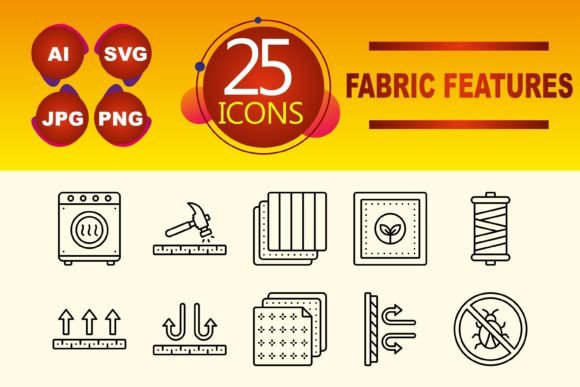
Fabric Features is not a software or a platform; it's a curated digital asset. Specifically, it's a set of ten icons created in a clean Line Icon style. This style uses strokes and outlines to create symbols, resulting in a modern, minimalist look that integrates seamlessly into various design environments. The set comes packaged with multiple file formats—AI, JPG, PNG, and SVG—making it ready for use across virtually any digital project.
The name "Fabric Features" hints at its purpose: to be a foundational, woven-in element of your design. These icons represent common "features" or functionalities, providing a ready-made toolkit for designers and creators who need to communicate standard concepts quickly and visually.
The Core Characteristics and Value
The primary value of Fabric Features lies in its simplicity and utility. The line style ensures the icons are not visually heavy, allowing them to complement content without overpowering it. This is particularly important in user interfaces, where icon clutter can hinder usability. Having the set in four file types adds immense practical value.
- The AI (Adobe Illustrator) file allows for unlimited vector editing and scaling, perfect for designers who need to customize colors or tweak shapes.
- SVG files are essential for modern web development, providing scalable, crisp graphics that don't lose quality on any screen size.
- The PNG and JPG raster formats offer quick, easy insertion into documents, slides, or basic image editors.
This multi-format approach means that whether you're a professional UI designer using advanced software or a business owner putting together a PowerPoint deck, you have a version that works for your workflow.
Where Can You Use Fabric Features Icons?
The applications are broad, reflecting the universal need for clear iconography. Let's look at some real-world scenarios.
- Mobile App Interfaces: A fitness app could use a simple line icon for a "heart rate" feature or a "settings" gear. Fabric Features' minimalist style aligns with modern app design principles that prioritize clean layouts and intuitive symbols.
- Website Templates and Dashboards: Admin panels or service websites often need icons for "user profile," "notification," or "search." Embedding these as SVG icons ensures they look perfect on both desktop and mobile browsers.
- Business Presentations and Infographics: When explaining a process or highlighting key services in a slide deck, a well-chosen icon can break up text and improve comprehension. Using the provided JPG or PNG files here is straightforward.
- Digital Prototyping and Wireframing: Even in early-stage mockups, using consistent icons like those in Fabric Features helps stakeholders visualize the final product's functionality more clearly.
The set is inherently cross-disciplinary. A marketer, a developer, a startup founder, and a graphic designer could all pull from the same Fabric Features pack for different phases of the same project.
Who Benefits from Using This Icon Set?
The audience is diverse. General consumers or online users might not use the files directly, but they benefit from the clearer, more attractive interfaces and communications that these icons help create. For the professionals and creators actually implementing them, the benefits are direct:
- Solo Entrepreneurs and Business Owners: With limited design resources, having a pre-made, professional-looking icon set saves time and budget. It elevates the polish of their website or marketing materials without requiring custom design work.
- UI/UX Designers and Front-End Developers: They gain a reliable, scalable asset that can be integrated into design systems or code repositories. The SVG format is a key advantage for them.
- Content Creators and Educators: Anyone producing infographics, online courses, or instructional videos can use these icons as visual anchors to explain concepts.
Evaluating Fabric Features for Your Project
While Fabric Features offers clear advantages, it's important to consider your specific needs before deciding if it's the right fit. Here are some practical points for evaluation.
Strengths and Ideal Use Cases
The set's greatest strength is its versatility and readiness. The inclusion of core file types covers almost all standard use cases. If your project requires a handful of common, generic feature icons and you need them in a format that's web-ready (SVG) and editable (AI), Fabric Features is a strong contender. Its line style is also a strength—it's a timeless, widely accepted aesthetic that fits into both corporate and creative contexts.
It's ideal for projects that need a quick visual solution without embarking on a full custom icon design process. Think of a new SaaS product's landing page, an internal company dashboard, or a prototype for a client presentation.
Considerations and Limitations
Understanding the limitations helps set realistic expectations. The set contains only 10 icons. This is perfect for projects needing a small, focused collection, but it is not a comprehensive library. If you need dozens or hundreds of unique icons for a complex application, you would need to supplement this set or look for a larger pack.
Additionally, they are Line Icons. While this is a popular style, some projects may require filled, solid, or more colorful, detailed iconography. Fabric Features will not suit a design that calls for a bold, textured, or 3D icon aesthetic. Finally, while the AI file allows for customization, it requires access to and knowledge of Adobe Illustrator. For users without vector editing software, customization options are limited to the raster formats.
Integrating Icons into Your Workflow
Once you've decided Fabric Features fits your need, practical integration is simple. Start by auditing your project to see which of the ten icons map to the features or concepts you need to represent. For web use, implement the SVG files using standard HTML tags or inline SVG code for greater control over styling with CSS. For presentations, drag and drop the PNG files into your slides. For design mockups in tools like Figma or Sketch, you can import the SVG or PNG assets.
Remember that consistency is key. Use the same icon style (like Fabric Features) throughout a single project to maintain a coherent visual narrative. Their minimalist nature also means they pair well with a variety of fonts and color schemes—you aren't locked into a specific visual tone.
Beyond the Download: Thinking About Icon Systems
Using a set like Fabric Features can be a stepping stone to thinking more systematically about iconography. Even with ten icons, consider establishing rules: a standard size, a consistent color applied to all icons in your project, and clear spacing guidelines around them. This turns a downloaded asset into a proper component of your design system, boosting the overall professionalism and usability of your final product.
In conclusion, Fabric Features provides a tangible, practical solution for a common design need. It removes the hurdle of creating or sourcing basic icons from scratch, offering a quality-assured, multi-format pack that serves a wide audience. By understanding its scope—both its capable versatility and its intentional limitations—you can effectively leverage these icons to enhance your digital projects, communicate more clearly, and create more polished user experiences across apps, websites, and presentations.