Viking Icons: Symbols of a Legendary Era for Modern Digital Design
The Vikings were not just raiders and explorers from the Norse lands; they were a culture rich with symbolism, mythology, and artistry. Their legacy, etched into history through sagas and archaeological finds, continues to captivate us today. This fascination naturally extends into our digital world, where the need to represent concepts quickly and visually is paramount. This is where specialized icon sets, like a collection of Vikings relative icons, become invaluable tools. Designed for clarity and style, these icons allow designers and content creators to instantly evoke the spirit of the Viking age in apps, websites, and presentations.
From Longships to Pixels: The Purpose of Viking Icon Sets
An icon is more than a simple picture; it's a visual shorthand that communicates an idea, function, or theme without words. A well-designed Viking icon set serves a clear purpose: to provide a cohesive, scalable, and versatile library of graphic elements centered on Norse culture. Instead of searching for disparate images or creating custom illustrations from scratch, a designer can access a ready-made collection that ensures visual consistency. Whether you're building an educational app about Norse mythology, designing a website for a historical documentary, or creating a presentation on Scandinavian heritage, having a set of unified icons streamlines the process and enhances the professional look of the project.
The significance lies in their ability to bridge historical content and modern interface design. They act as cultural anchors, instantly signaling to the user the thematic context of the digital product. A silhouette of a longship doesn't just represent a ship; it conjures ideas of exploration, adventure, and formidable nautical engineering. A stylized Viking helmet icon (often deliberately shown without the mythical horns to correct a common historical misconception) can represent warriors, strength, or a historical section. These symbols carry weight, making content more engaging and accessible.
Decoding the Set: What's in a Viking Icon Collection?
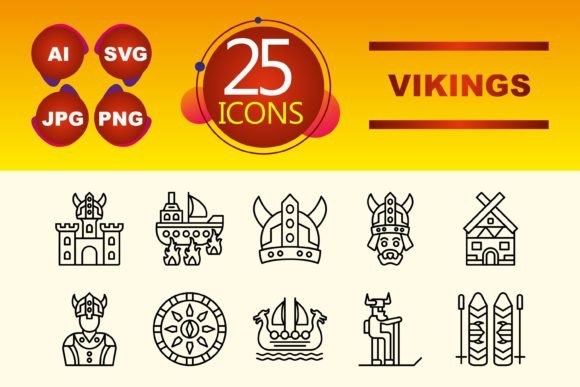
A typical set, as described, might include 10 icons covering key relative symbols. While the exact icons can vary, such a collection often features:
- Longship: The iconic vessel that enabled Viking exploration and trade.
- Viking Helmet: A representation of the warrior, often designed based on actual archaeological finds.
- Raven: Associated with the god Odin and a symbol of insight and news.
- Ax or Sword: Representing warfare, craftsmanship, and power.
- Runic Stone: Symbolizing writing, history, and mysterious lore.
- Mjölnir (Thor's Hammer): An emblem of protection, strength, and divine power.
- Viking Shield: Denoting defense, community, and resilience.
- Knotwork or Celtic-inspired Pattern: Reflecting the intricate artistry of the era.
- Horn: Suggesting drinking vessels, celebration, or storytelling.
- Compass or Sunstone: A nod to their legendary navigation skills.
The Line Icon style is particularly suited for modern design. This style uses clean, continuous strokes of uniform weight to create an outline of the subject. It results in icons that are crisp, minimalist, and highly legible even at small sizes. This aesthetic aligns perfectly with contemporary UI/UX trends that favor simplicity and scalability across different screen resolutions.
Practical Relevance: Viking Icons in Modern Digital Life
How do these historical symbols fit into our contemporary work and creativity? Their practical relevance is broad and multifaceted.
Enhancing Educational and Informational Content
In education, visual aids are crucial for learning. An e-learning module on medieval history can use a longship icon to mark sections on Viking travel, a rune stone icon for lessons on language, and a raven icon for mythology chapters. This creates a intuitive navigation system for students. Similarly, informational websites or blogs about Vikings can use these icons to break up text, highlight key points in infographics, or create visually appealing lists, making the content more digestible and engaging for general readers.
Powering Mobile Apps and Web Templates
For mobile app developers or website template designers, such a set is a resource for creating thematic interfaces. A game with a Viking setting might use these icons for menu buttons, inventory items, or map markers. A travel website focusing on Nordic countries could integrate Viking icons into its design to instantly establish a cultural theme. The provided file types—AI (Adobe Illustrator), JPG, PNG, and SVG—are essential for this work. SVG files are vector-based, allowing icons to scale infinitely without losing quality, perfect for responsive web design. PNG files offer transparency for overlays, JPGs are useful for certain digital placements, and the AI file gives designers full editable control for customization.
Strengthening Presentations and Business Branding
In a business or presentation context, icons can elevate slides and reports. A company with Norse-inspired branding (perhaps in logistics, symbolizing exploration and efficiency, or in craftsmanship) can use these icons in its PowerPoint templates, annual reports, or marketing materials to reinforce its brand identity visually. They help tell a story quickly, turning a standard presentation into a more memorable and cohesive narrative.
A Tool for Creativity and User Interface Design
For UI/UX designers and graphic artists, a curated icon set is a springboard for creativity. It saves time and provides a professional baseline from which to work. Designing a user interface for a historical database or a museum interactive display? These icons offer ready-made components that fit the theme. Their line style ensures they won't clash with other design elements and will remain clear and functional, which is the core goal of any good user interface.
Clarifying Common Assumptions: The Historical and the Visual
It's worth addressing a common misunderstanding when using Viking-themed imagery: the horned helmet. Historically, there is no evidence that Viking warriors wore helmets with horns; this is a romanticized addition from later artistic periods. A well-designed, historically-conscious icon set will likely depict a helmet based on actual artifacts—a simple, conical or rounded design sometimes with a nose guard. Using accurate icons can, in itself, be a subtle form of educational correction, promoting a more authentic understanding of Viking culture through design.
Another assumption is that Viking icons are only for "violent" or "war-like" themes. While axes and shields are included, the culture was also about exploration (longship, compass), trade, storytelling (horn, runes), and complex spirituality (raven, Mjölnir). A comprehensive set allows designers to represent the full spectrum of Viking life, not just one aspect.
Building a Broader Understanding: Icons as Cultural Bridges
Ultimately, utilizing a Viking icon set helps build a broader understanding of both history and modern design principles. For the user or viewer, these icons serve as intuitive entry points into a complex historical topic. For the designer or creator, they demonstrate how visual symbolism from any era can be abstracted, refined, and repurposed to meet the needs of contemporary communication. They show that design is not just about aesthetics; it's about efficient information transfer and emotional resonance.
The integration of such thematic assets into technology and daily digital activities—from the app we use to learn history to the website we browse for travel ideas—shows how our digital landscape is enriched by cultural references. These icons are tiny digital artifacts, carrying the essence of a legendary era into our screens, making the past accessible and visually relevant in our present.
In conclusion, a Vikings relative icon set in a clean Line Icon style is far more than a bundle of graphics. It is a versatile toolkit for digital storytelling. It supports education, enhances business and creative projects, and ensures design consistency across platforms. By choosing a set with multiple file types like AI, JPG, PNG, and SVG, designers equip themselves for any scenario. Whether you're a beginner looking to easily theme a project or an experienced professional needing efficient, scalable assets, these icons offer a direct link to the rich visual world of the Vikings, ready to sail into your next digital creation.